
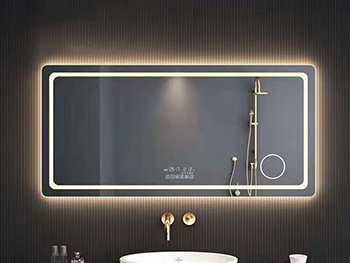
Smart mirrors with wall-mount or embedded options are becoming a core element of modern smart homes, connected bathrooms, hospitality suites, retail fitting rooms, medical facilities, and commercial interiors.
This comprehensive guide explains what a smart mirror is, how wall-mount and recessed/embedded installation options differ, and which specifications, features, and safety standards matter when selecting a smart mirror for residential or professional projects.
All information in this article is generic and industry-wide. The focus is on definitions, terminology, specifications, and common configurations rather than on any specific brands or manufacturers.
The goal is to provide SEO‑friendly, detailed, and structured content that can be used for blog posts, category pages, industry resources, and product taxonomy pages related to “smart mirrors with wall-mount or embedded options.”
A smart mirror is a reflective surface that functions as both a traditional mirror and an interactive digital display.
Behind or integrated into the mirror glass, there is usually a screen (LCD, LED, or OLED), sensors, smart lighting, and an embedded operating system or controller.
Smart mirrors can display information, run applications, control smart home devices, and respond to touch, voice, or gesture.
| Component | Description | Key Considerations |
|---|---|---|
| Mirror Glass | Specially coated glass or acrylic that reflects like a traditional mirror while allowing light from a display to pass through. | Reflectivity, transparency, anti-fog, safety backing, thickness, color temperature neutrality. |
| Display Panel | Embedded LCD, LED, or OLED display behind the mirror glass for showing content. | Brightness, contrast, resolution, viewing angle, energy consumption, lifespan. |
| Frame / Housing | Structural frame and back housing that holds the mirror, display, electronics, and mounting hardware. | Depth, material (aluminum/steel/plastic), heat management, wall-mount or embedded compatibility. |
| Processing Unit | Embedded computer or controller running the smart mirror software. | CPU/GPU performance, RAM, storage, OS (Android, Linux, proprietary), update support. |
| Connectivity | Wireless and wired connectivity options for internet and device integration. | Wi‑Fi, Bluetooth, Ethernet, Zigbee, Z‑Wave, power line communication, antenna placement. |
| Input Methods | Ways users interact with the mirror: touch, voice, gestures, or physical buttons. | Touch technology (capacitive/IR), microphone arrays, camera sensors, waterproof controls. |
| Lighting | Integrated LED lighting around or behind the mirror for functional and ambient lighting. | Lumen output, CRI, color temperature, dimming, RGB options, energy efficiency. |
| Power & Safety | Electrical components, power supply, and safety protections. | Voltage compatibility, IP rating, RCD/GFCI requirements, over‑current/over‑voltage protection. |
Smart mirrors with wall-mount or embedded options differ mainly in how they are installed and integrated into the wall or surface.
Understanding the differences between surface‑mounted and recessed installation is essential for correct planning, cable routing, ventilation, and compliance with building regulations.
A wall-mount smart mirror is installed on the surface of a wall, similar to a traditional framed mirror or a flat-screen TV.
The body of the smart mirror, including the housing and electronics, is visible as a unit that protrudes slightly from the wall.
| Mounting Type | Description | Use Cases | Advantages | Limitations |
|---|---|---|---|---|
| Bracket Mount (VESA‑style) | Metal wall bracket fixed to studs or masonry; mirror hangs or locks onto bracket. | Bathrooms, bedrooms, gyms, hotels, offices. | Secure, allows adjustment, supports larger and heavier mirrors. | Requires accurate stud/anchor placement; small gap from wall may be visible. |
| French Cleat / Rail | Angled cleat fixed to the wall and matching cleat on mirror for easy hanging. | Residential bathrooms, bedrooms, decorative installations. | Quick installation and removal, strong load capacity. | Limited tilt adjustment, precise leveling required. |
| Keyhole / Hook Mount | Integrated keyhole slots or hooks on the back of the frame. | Smaller and lighter smart mirrors. | Simple and low cost. | Less suitable for heavy units; limited security and adjustment. |
| Flush Wall Plate | Custom plate recessed slightly into the wall to minimize visible gap. | High-end residential and hospitality projects. | Cleaner aesthetic, reduced protrusion. | Requires more planning during construction or renovation. |
An embedded or recessed smart mirror is installed partially or completely within a wall cavity, niche, or custom housing so that the front surface sits flush or nearly flush with the wall finish.
These smart mirrors are sometimes referred to as "built‑in smart mirrors" or "in‑wall smart mirrors."
| Embedded Type | Description | Typical Wall Construction | Advantages | Considerations |
|---|---|---|---|---|
| Full Recessed In‑Wall | Mirror chassis installed between studs, flush with drywall or tile surface. | Stud walls (metal or wood), partition walls, service walls. | Ultra‑clean look, protects edges, saves space in compact rooms. | Depth requirements, compliance with plumbing/electrical codes, access for maintenance. |
| Partially Recessed | Mirror projects only slightly from the surface, with part of the housing inside the wall. | Walls with limited cavity depth or obstacles behind. | Reduced protrusion without full rebuild of wall. | Balance of aesthetics and simplicity; may need custom framing. |
| Cabinet Integration | Mirror door or panel of a recessed cabinet includes embedded smart display. | Bathroom medicine cabinets, storage niches. | Combines storage and technology, optimized for grooming use. | Door swing and cable routing; moisture and IP rating around cabinet. |
| Architectural Panel Integration | Mirror integrated into custom wall panels, columns, or cladding systems. | High‑end hospitality, retail, commercial interiors. | Perfect visual continuity; supports large arrays of smart mirrors. | Strong reliance on design coordination, often project‑specific engineering. |
| Aspect | Wall-Mount Smart Mirror | Embedded / Recessed Smart Mirror |
|---|---|---|
| Installation Complexity | Lower; can usually be installed onto finished walls with basic tools. | Higher; requires planning, cutting walls, framing, and professional trades. |
| Aesthetic Integration | Visible frame and depth; looks similar to framed mirror or TV. | Seamless, flush appearance; integrated into architecture. |
| Retrofit Suitability | Ideal for retrofits and renovations without major wall changes. | More suited to new builds or large remodels. |
| Space Efficiency | Takes up some room depth; may protrude into smaller spaces. | Maximizes space; little or no protrusion. |
| Service Accessibility | Easier to remove from wall, access rear, or replace. | Access may require removable panels or service openings. |
| Structural Requirements | Anchors or studs needed; no modification of stud layout. | May require framing adjustments, wall reinforcement, fire‑stopping. |
| Cable Management | Can be surface‑routed or run internally; simpler for electricians. | Neatly hidden inside walls; complex routing during build stage. |
| Heat Dissipation | Better natural convection due to exposed housing. | Needs engineered ventilation or passive vents in wall cavity. |
| Design Flexibility | Standard sizes; can be moved or replaced relatively easily. | High customization; normally fixed in position long‑term. |
To compare different smart mirrors without referencing specific brands, it is useful to understand common specification parameters that appear in catalogs, technical sheets, and BIM data.
The following sections outline the typical specs that professionals review when evaluating smart mirrors.
| Parameter | Typical Values / Options | Relevance for Wall-Mount or Embedded Smart Mirrors |
|---|---|---|
| Glass Material | Tempered glass, laminated glass, safety glass, acrylic / polycarbonate. | Tempered or laminated safety glass is preferred in bathrooms, gyms, and public spaces; acrylic is lighter but easier to scratch. |
| Glass Thickness | 3 mm, 4 mm, 5 mm, 6 mm, 8 mm, or more depending on size. | Thicker glass improves rigidity and safety for large mirrors; must be balanced with display brightness and total weight for mounting. |
| Reflectivity | Typically 30–70% for one‑way mirror glass used with displays. | Higher reflectivity gives a more “mirror‑like” experience; lower reflectivity improves display visibility behind the glass. |
| Color Neutrality | Low iron glass or color‑corrected coatings. | Helps maintain true color perception for makeup, grooming, and retail fitting. |
| Anti‑Fog Treatment | Coatings or heated pad systems. | Essential for Bathroom smart mirrors in humid environments; helps maintain visibility after showers. |
| Shatter Protection | Safety backing film, laminated interlayers. | Important for embedded smart mirrors in public areas and for compliance with safety standards. |
| Edge Finish | Polished, beveled, framed, frameless with ground edges. | Influences style and compatibility with flush or wall-mount options. |
| Parameter | Typical Ranges | Importance for Smart Mirror Performance |
|---|---|---|
| Diagonal Size | From 10" up to 75"+ depending on use case. | Determines how much interactive area is available; embedded smart mirrors may use larger panels for architectural features. |
| Resolution | HD (1280×720), Full HD (1920×1080), 4K (3840×2160), higher for large displays. | Higher resolution improves clarity for text, facial details, and AR content; less critical for small secondary displays. |
| Brightness (nits) | Typically 250–700+ cd/m². | Must compensate for reflection and ambient light; higher brightness is usually needed behind reflective glass. |
| Contrast Ratio | 1000:1 to 5000:1 or more. | Higher contrast enhances readability of dark UI elements behind reflective surfaces. |
| Panel Type | IPS LCD, VA LCD, OLED, mini‑LED backlight. | IPS offers wide viewing angles; OLED provides deep blacks and thin profiles; VA has higher contrast but narrower angles. |
| Refresh Rate | 60 Hz standard, sometimes 120 Hz. | Standard 60 Hz is adequate for most smart mirror functions; higher rates can improve motion smoothness for fitness content. |
| Viewing Angle | Typically 178° horizontal/vertical for IPS and OLED. | Wide angles matter in wide bathrooms, gyms, or multi‑user commercial spaces. |
| Operating Temperature | Often 0–40 °C, sometimes extended ranges. | Important for embedded smart mirrors installed in poorly ventilated walls or in demanding environments. |
| Parameter | Options | Notes for Wall-Mount and Embedded Smart Mirrors |
|---|---|---|
| Touch Technology | Capacitive, infrared (IR) frame, resistive, optical. | Capacitive is common for sleek glass surfaces; IR frames offer good performance behind thick glass and allow use with gloves. |
| Touch Points | 2‑point, 10‑point, 20‑point or more. | Multi‑touch improves gesture recognition and multi‑user scenarios, especially in public installations. |
| Response Time | Typically 5–20 ms for touch detection. | Faster response gives a more natural experience, especially for drawing, AR makeup, or fitness motion interfaces. |
| Touch Through Glass Support | Yes / No depending on construction. | Critical when the touch layer is behind mirror glass; must be tuned for glass thickness and coatings. |
| Gesture Recognition | Optional camera or radar‑based sensors. | Useful where direct touch is undesirable (e.g., public restrooms, medical use). |
| Voice Control | Far‑field microphone arrays, noise cancellation. | Capable of hands‑free operation; requires acoustic design for bathrooms and tiled rooms. |
| Feature | Typical Specification | Relevance |
|---|---|---|
| Wi‑Fi | 2.4 GHz b/g/n, dual‑band 2.4/5 GHz ac/ax. | Primary method for internet access and cloud connection. |
| Bluetooth | Bluetooth 4.x, 5.x LE. | Audio streaming to speakers, peripheral pairing (scales, heart rate straps, toothbrushes). |
| Ethernet | 10/100 or Gigabit RJ‑45 port (sometimes optional). | Preferred in commercial embedded smart mirrors where wireless reliability is critical. |
| Smart Home Protocols | Zigbee, Z‑Wave, Thread, Matter (via hub or built‑in). | Enable control of lights, blinds, thermostats, and scenes directly from the mirror. |
| Audio I/O | 3.5 mm jack, optical, HDMI ARC/eARC, or Bluetooth audio. | Connects to external speakers, ceiling audio, or soundbars. |
| USB Ports | USB‑A/USB‑C for peripherals or media. | Used for service, firmware updates, webcams, or diagnostic tools. |
| Cloud Platform | Proprietary cloud, standard IoT cloud services. | Allows remote management, analytics, firmware updates, and content scheduling. |
| Specification | Typical Values | Notes for Bathrooms and Wet Areas |
|---|---|---|
| Input Voltage | 100–240 V AC, 50/60 Hz. | Wide range input supports global use; bathrooms may require dedicated RCD/GFCI protected circuits. |
| Power Consumption | 20–300+ W depending on size and features. | Higher for large embedded smart mirrors with bright displays and heating elements. |
| Standby Power | Typically <1–5 W. | Energy‑saving features like motion detection and scheduling reduce consumption. |
| Ingress Protection (IP Rating) | IP20 for dry areas, IP44/IP54 or higher for damp and wet environments. | Embedded bathroom smart mirrors over sinks and near showers often target IP44+ for splash protection. |
| Operating Humidity | 10–90% non‑condensing (typical). | Anti‑fog, sealed housings, and conformal coating on electronics improve durability in humid bathrooms. |
| Safety Certifications | UL, ETL, CE, CB, RoHS, REACH (depending on region). | Critical for code compliance in residential and commercial construction. |
Smart mirrors provide both functional and aesthetic advantages compared with traditional mirrors.
The choice between wall-mount and embedded installation introduces additional benefits in terms of flexibility, spatial design, and integration with other building systems.
Smart mirrors with wall-mount or embedded options can be specified in different environments.
Below are common application categories with notes on installation preferences and important considerations.
Proper planning and installation are essential to ensure safe, reliable, and aesthetically pleasing smart mirror deployments, whether the units are wall‑mounted or embedded.
Smart mirrors with wall-mount or embedded options can be customized extensively to align with interior design concepts and user experience goals.
The following tables present example configuration profiles for typical wall-mount and embedded smart mirrors.
Values are indicative, representing common ranges rather than specific product data.
| Category | Typical Wall-Mount Bathroom Smart Mirror Spec |
|---|---|
| Use Scenario | Residential bathroom over sink / vanity |
| Installation | Surface wall-mount with bracket, concealed power outlet behind unit |
| Size | 24–36" diagonal display, 600–1200 mm mirror width |
| Glass | 4–5 mm tempered safety glass with anti‑fog pad and polished edges |
| Display Brightness | 300–500 nits adjusted for reflective surface |
| Touch | Capacitive touch or non‑touch with voice control and capacitive buttons |
| Lighting | Integrated LED perimeter lights, CRI ≥ 90, dimmable, 3000–6000 K |
| Connectivity | Wi‑Fi, Bluetooth, optional wired Ethernet |
| IP Rating | IP44 front; rear housing protected from direct water exposure |
| Power | AC 100–240 V, 50/60 Hz, 60–120 W depending on size |
| Functions | Clock, weather, calendar, media streaming, voice assistant, smart lighting control |
| Category | Typical Embedded Smart Mirror Spec |
|---|---|
| Use Scenario | Hotel guest bathroom, integrated in wall tile assembly |
| Installation | Fully recessed between studs, framed opening with moisture‑resistant backing |
| Size | 32–43" diagonal display, custom mirror dimensions to match tile grid |
| Glass | Laminated safety glass with shatter protection and anti‑fog heating |
| Display Brightness | 400–700 nits, tuned for bright bathroom lighting |
| Touch | IR touch frame or projected capacitive touch through thicker glass |
| Lighting | Frameless front with separate wall lighting or integrated dual‑circuit LED light zones |
| Connectivity | Ethernet to hotel network, Wi‑Fi for guest devices, integration with room control system |
| IP Rating | Front IP44–IP54, sealed enclosure at rear to protect electronics |
| Power | Hard‑wired to dedicated bathroom circuit with RCD/GFCI protection |
| Functions | TV mode, hotel service information, lighting and blind control, multi‑language UI |
| Category | Typical Embedded Fitting Room Smart Mirror Spec |
|---|---|
| Use Scenario | Fashion retail fitting room with interactive AR features |
| Installation | Recessed full‑height mirror panel integrated into partition wall |
| Size | 55–65" diagonal display or distributed display segments |
| Glass | Large format tempered or laminated glass with high clarity and color neutrality |
| Display Brightness | 500–800 nits to compete with store lighting and reflections |
| Touch | Multi‑point touch or touchless gesture combined with camera‑based AR |
| Connectivity | Ethernet back to store network, Wi‑Fi for guest interactions, integration with inventory systems |
| Audio | Integrated speakers or external ceiling speakers, acoustic tuning for privacy |
| Power | Centralized power distribution via technical ceiling or closet |
| Functions | Virtual try‑on, style recommendations, product information, staff call button, analytics collection |
When specifying or purchasing smart mirrors, the following checklist summarizes key questions and criteria to consider.
Smart mirrors with wall-mount or embedded options are versatile solutions that merge reflective surfaces with digital intelligence, enabling new user experiences in bathrooms, bedrooms, gyms, hospitality suites, retail environments, healthcare facilities, and commercial buildings.
Wall-mount smart mirrors are generally easier to install, more flexible for retrofits, and simpler to maintain.
Embedded or recessed smart mirrors, on the other hand, provide a seamless, integrated appearance and are particularly well‑suited for premium residential and commercial design projects where spatial efficiency and aesthetics are priorities.
By understanding the definitions, specifications, advantages, and installation requirements outlined in this guide, designers, integrators, and end users can make informed decisions when selecting smart mirrors for their projects without relying on individual brand descriptions.
This structured, industry‑wide overview can be adapted as content for blogs, category pages, and technical resources focused on smart mirrors with wall-mount or embedded options.
```
This website uses cookies to ensure you get the best experience on our website.


 Español
 Français
 日本語
 العربية



 Phone
Comment
(0)