
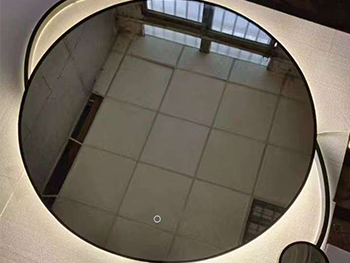
Smart mirrors with touchless sensor features are rapidly becoming a key part of modern digital interiors,
commercial environments, and connected home experiences. Designed to combine reflective functionality with
intelligent automation, these advanced mirrors allow users to control lighting, display content, access
information, and interact with mirror-based interfaces without physical contact. As demand grows for hygiene,
convenience, premium aesthetics, and IoT-enabled living, smart mirrors with touchless sensor features are
gaining strong attention across residential, hospitality, healthcare, retail, fitness, and corporate sectors.
This page provides an original, SEO-friendly, industry-focused overview of smart mirrors with touchless sensor
features. It includes definitions, core functions, advantages, technologies, use cases, feature comparisons,
technical specifications, and buying considerations. The content is written for direct use in blog posts,
directory pages, category pages, or industry landing pages, with clear structure and keyword-rich formatting
suitable for search engine indexing.
Smart mirrors with touchless sensor features are interactive mirrors equipped with digital displays, embedded
computing hardware, and sensor-based controls that respond to gestures, motion, proximity, voice, or automated
triggers. Unlike conventional mirrors, these devices can show time, weather, calendar updates, news, fitness
metrics, skincare data, room information, or custom content while preserving the mirror’s reflective surface.
The defining characteristic of a touchless smart mirror is the ability to operate without direct physical
contact. Users may wave a hand, approach the mirror, speak a command, or trigger functions via motion sensors,
infrared detection, proximity sensing, radar, or voice recognition. This contact-free operation improves
cleanliness, reduces wear from repeated touch, and creates a more premium, futuristic user experience.
In practical terms, a smart mirror with touchless sensor features can function as:
Touchless sensor features are not just a convenience upgrade. They represent a major shift in how digital
interfaces are used in hygienic, high-traffic, and premium environments. A touchless smart mirror reduces the
need for physical buttons and direct surface contact, which supports cleaner operation in bathrooms, gyms,
salons, clinics, hotels, and public areas.
The growing popularity of touchless smart mirror technology is also linked to user expectations. Modern users
increasingly want seamless, intuitive, and responsive digital products. Gesture-based and voice-enabled mirror
controls provide an elegant interaction model that feels intuitive while maintaining the minimal visual style
that mirrors are known for.
For architects, interior designers, builders, and procurement teams, touchless sensor smart mirrors also offer
functional value. They help differentiate spaces, increase perceived quality, support smart building strategies,
and integrate well with contemporary design themes. Because these mirrors are often installed in both residential
and commercial settings, they can be tailored for aesthetic appeal, durability, and advanced automation.
Smart mirrors with touchless sensor features typically combine several technologies into one product. The exact
configuration depends on the application, but most models may include the following core features:
The technology behind a smart mirror with touchless sensor features is a blend of optics, sensors, embedded
software, and display systems. At a basic level, the mirror uses a partially reflective surface paired with a
hidden screen or projection layer. When the display is off, it appears as a normal mirror. When activated, digital
content becomes visible through the reflective surface.
Touchless control is typically managed by one or more sensors:
Many touchless mirror systems follow a simple interaction flow: standby mode, detection mode, activated display
mode, and auto-off or sleep mode after inactivity. This structure improves energy efficiency while keeping the
user experience smooth and intuitive.
Smart mirrors with touchless sensor features deliver multiple advantages across residential and commercial use
cases. These benefits contribute to stronger search interest around terms such as smart mirror benefits,
touchless mirror features, sensor mirror advantages, and interactive mirror technology.
| Advantage | Description | Typical Benefit |
|---|---|---|
| Touch-Free Operation | Users interact without pressing buttons or touching the screen. | Improved hygiene and convenience. |
| Modern Aesthetics | Minimalist design integrates digital function into a sleek mirror surface. | Premium visual appeal in homes and businesses. |
| Multifunctionality | The mirror can show time, weather, alerts, media, or smart home data. | More value from a single device. |
| Energy Efficiency | Sensor-based activation helps avoid unnecessary screen use. | Reduced power consumption. |
| Improved Hygiene | No direct touch is needed in frequently used or shared spaces. | Better cleanliness and lower contamination risk. |
| User Convenience | Gestures or voice commands simplify operation. | Faster, easier daily use. |
| Smart Integration | Works with connected systems and apps. | Better automation and centralized control. |
| Brand Differentiation | Commercial spaces can offer a more advanced experience. | Stronger brand image and customer impression. |
The market for smart mirrors with touchless sensor features spans multiple industries. Each sector values a
different combination of hygiene, interactivity, visual impact, and functionality. Below are the most common
applications.
In homes, touchless smart mirrors are often used in bathrooms, wardrobes, and vanity areas. They can display
time, weather, reminders, and beauty or grooming content while offering touch-free lighting adjustments. This
makes them especially useful in early morning routines and shared family bathrooms.
Hotels use smart mirrors to create a modern guest experience. Touchless functions are especially valuable in
bathrooms and suites where cleanliness and convenience are highly prioritized. Mirrors may display welcome
messages, room information, local weather, and service prompts.
Fitness-oriented smart mirrors can show training instructions, biometric data, timers, or class content. Touchless
control allows users to change views without interrupting exercise flow. In wellness environments, the mirror can
support meditation, posture feedback, and health-focused routines.
In retail, smart mirrors with touchless sensor features can support virtual fitting, product browsing, and brand
messaging. Because shoppers often prefer low-contact interaction, gesture-based or proximity-based control works
well in stores, fitting rooms, and showroom environments.
Hygiene is critical in healthcare. Touchless mirrors can reduce contact points while providing patient
information, reminders, wellness prompts, or staff-facing content. They are especially useful in recovery rooms,
clinics, and personal care facilities.
In offices, lobbies, and public restrooms, touchless smart mirrors can deliver useful information while supporting
a polished and modern appearance. This makes them valuable for smart building projects and premium commercial
interiors.
The following table compares common smart mirror features and shows how touchless sensors contribute to the
overall user experience.
| Feature | Standard Mirror | Basic Smart Mirror | Touchless Sensor Smart Mirror |
|---|---|---|---|
| Reflective Surface | Yes | Yes | Yes |
| Digital Display | No | Yes | Yes |
| Touch Control | No | Usually Yes | Optional |
| Gesture Control | No | Sometimes | Yes |
| Voice Control | No | Sometimes | Often Yes |
| Motion Detection | No | Sometimes | Yes |
| Hygiene Support | Low | Medium | High |
| Smart Content Display | No | Yes | Yes |
| Energy Optimization | No | Medium | High |
| Premium User Experience | Low | Medium | High |
Smart mirrors with touchless sensor features are available in a wide range of technical configurations. The
following table outlines commonly seen specifications in the industry. Actual values vary depending on design,
installation, and product category.
| Specification | Typical Range | Notes |
|---|---|---|
| Display Size | 15 inches to 55+ inches | Smaller sizes suit bathrooms and vanity areas; larger sizes suit fitness and retail. |
| Mirror Type | Two-way reflective glass / semi-transparent mirror panel | Designed to reveal digital content when active. |
| Resolution | HD, Full HD, or 4K | Higher resolution improves readability and visual quality. |
| Sensor Types | Motion, proximity, infrared, radar, microphone | Supports touchless interaction and automatic activation. |
| Connectivity | Wi-Fi, Bluetooth, optional Ethernet | Used for updates, apps, content sync, and device pairing. |
| Lighting | LED front light or backlight | Brightness may be adjustable and color temperature may vary. |
| Operating System | Embedded OS or Android-based platform | Supports applications and user interface control. |
| Power Input | AC power, low-voltage system, or hardwired setup | Depends on installation location and electrical requirements. |
| Auto Sleep Function | Yes | Improves energy efficiency when no user is present. |
| Installation Type | Wall-mounted, recessed, or integrated cabinetry | Common in bathrooms, hotel rooms, and custom interiors. |
The term touchless sensor features may refer to several different detection methods. Choosing the right sensor
technology depends on the intended environment, desired responsiveness, and budget.
| Sensor Technology | Primary Function | Best Use Case |
|---|---|---|
| Infrared Sensor | Detects nearby presence or hand movement | Bathrooms, vanity mirrors, compact smart mirrors |
| Motion Sensor | Identifies movement to activate display | Homes, hotels, shared restrooms |
| Proximity Sensor | Measures distance from the user | Fitness mirrors, premium bathroom mirrors |
| Radar Sensor | Detects motion with high sensitivity | Advanced commercial and industrial installations |
| Voice Recognition | Processes spoken commands | Hands-busy environments, smart home settings |
| Camera-Based Gesture Recognition | Interprets hand gestures or movement patterns | Interactive retail, fitness, and premium smart mirrors |
When selecting or specifying a smart mirror with touchless sensor features, several design and installation
factors should be considered. These choices can influence performance, appearance, and long-term reliability.
Build quality is a major ranking factor when evaluating smart mirrors with touchless sensor features. Premium
models often use tempered glass, anti-fog coatings, sealed electronic housings, and corrosion-resistant frames.
These elements improve both appearance and longevity.
Important construction factors include:
For search visibility, content related to smart mirrors with touchless sensor features often benefits from
semantic keyword coverage. Common search phrases include smart mirror, touchless mirror, sensor mirror,
interactive mirror, gesture control mirror, motion activated mirror, voice controlled mirror, bathroom smart
mirror, LED smart mirror, and smart mirror with display.
Related long-tail keywords can include:
Using these phrases naturally in headings, tables, bullet lists, and descriptive paragraphs can help a page
appear more relevant for related search intent. However, keyword usage should remain readable and informative,
with content written primarily for human visitors.
When evaluating a smart mirror with touchless sensor features, buyers should focus on practical criteria rather
than visual appeal alone. The best choice depends on where the mirror will be used and what level of automation
is required.
| Buying Factor | What to Check | Why It Matters |
|---|---|---|
| Sensor Accuracy | Responsiveness, detection range, and false trigger rate | Ensures reliable touchless operation. |
| Display Visibility | Brightness, contrast, and readability in the intended room | Improves usability in different lighting conditions. |
| Humidity Resistance | Protection level for bathrooms or wet areas | Supports durability in moisture-heavy spaces. |
| Interface Simplicity | Easy controls and clear menu layout | Reduces user confusion and improves adoption. |
| Content Flexibility | Support for widgets, apps, or custom screens | Allows the mirror to fit different use cases. |
| Installation Requirements | Mounting, wiring, and maintenance needs | Affects project cost and complexity. |
| Power Consumption | Energy use in active and standby modes | Important for long-term operating cost. |
| Privacy and Security | Data handling and user access controls | Critical for camera- or network-enabled mirrors. |
The future of smart mirrors with touchless sensor features is closely connected to broader trends in smart
buildings, connected homes, and digital wellness. Several developments are likely to shape the category over
time.
Smart mirrors with touchless sensor features combine reflective design, digital display technology, and
contact-free controls to create a versatile, modern, and highly functional product category. Their value lies
in convenience, hygiene, automation, and premium aesthetics, making them suitable for a wide range of
residential and commercial environments.
Whether used as a Bathroom smart mirror, a fitness mirror, a retail mirror, or a hospitality display, these
devices offer strong usability and visual impact. As sensor accuracy, display quality, and smart integration
continue to improve, touchless smart mirrors are expected to become even more common in both home and business
settings.
For SEO-focused pages, this topic offers strong keyword potential, broad commercial relevance, and multiple
content angles such as benefits, specifications, applications, and future trends. By using structured headings,
descriptive tables, and industry-wide terminology, pages about smart mirrors with touchless sensor features can
support search visibility while delivering genuine informational value.
```
This website uses cookies to ensure you get the best experience on our website.


 Español
 Français
 日本語
 العربية



 Phone
Comment
(0)