
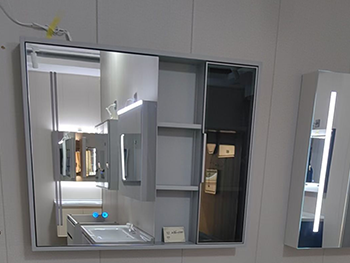
Integrated Defogger and Heated Bathroom Mirrors: Engineering Clarity for Modern Living
Industry Background and Market Demand
The global bathroom fixtures market is undergoing a significant transformation, driven by a confluence of consumer demand for smarter, more functional living spaces and a broader architectural shift towards wellness-centric design. Within this evolution, the humble bathroom mirror has transitioned from a passive reflective surface to an active, integrated component of the user experience. The persistent issue of mirror fogging—a simple condensation phenomenon resulting from temperature differentials between humid shower air and the cooler mirror surface—has long been a universal domestic annoyance. Traditional solutions, from chemical sprays to manual wiping, are temporary and often damage mirror coatings.
This pain point has catalyzed a robust market for permanent, engineered solutions. Demand is particularly strong in regions with high humidity and colder climates, as well as in the premium residential and hospitality sectors where guest experience is paramount. The integration of defogging technology is no longer a luxury add-on but is increasingly considered a standard expectation in mid-to-high-end bathroom renovations and new constructions. The market now expects solutions that are not only effective but also seamless, safe, and energy-efficient, pushing manufacturers to innovate beyond basic heating pads to sophisticated, integrated systems.
Core Technology: The Principle of Condensation Prevention
At its heart, an integrated defogger is a thermal management system. The core technological principle is straightforward: by raising the surface temperature of the mirror glass above the dew point of the surrounding humid air, condensation cannot form. This is achieved through a uniform and controlled application of heat across the mirror's rear surface.
The key is uniformity. A hot spot in the center with cold edges leads to partial, patchy clearing, which is functionally useless. Therefore, the engineering challenge lies in designing a heating element or system that distributes thermal energy evenly across the entire surface area of the glass, regardless of its size or shape, while maintaining electrical safety in a wet environment. Modern systems have moved from simple, resistive wire grids to advanced, thin-film technologies that provide consistent heat dispersion and allow for more flexible design integration.
Product Structure, Performance, and Manufacturing
A high-performance integrated heated mirror is a multi-layered composite product. Its construction typically involves:
1. Glass Substrate: Usually tempered safety glass, 4mm to 6mm thick, providing structural integrity and safety. The glass can be clear, low-iron for superior clarity, or tinted.
2. Reflective Coating: A durable, high-purity silver or aluminum coating is applied to the rear surface, protected by multiple backing layers of copper and paint to prevent oxidation and corrosion.
3. Heating Element Layer: This is the critical component. Advanced systems use a transparent, conductive metallic oxide coating (such as Indium Tin Oxide - ITO) applied via magnetron sputtering, or precisely printed micro-wire grids using conductive silver or carbon inks. These methods create an almost invisible, uniform heating plane.
4. Insulation and Backing: The rear of the assembly is insulated with a foam or rubberized pad. This serves dual purposes: it protects the electrical components and directs the thermal energy forward through the glass rather than dissipating it into the wall.
5. Power and Control Unit: A low-voltage (typically 12V, 24V, or 110/240V AC) transformer or direct supply powers the element. Controls range from simple manual switches and integrated touch sensors to smart home-compatible modules that can be activated via motion, humidity sensors, or scheduled routines.
Performance is measured by defogging speed (time to achieve a clear surface from a fogged state), operational temperature (typically maintaining the glass surface at 35-40°C / 95-104°F), energy consumption (watts per square meter), and optical quality (ensuring no distortion or visible element pattern).
Critical Factors Influencing Quality and Performance
Several engineering and material choices directly dictate the end-product's reliability and efficacy:
Heating Element Homogeneity: The consistency of the conductive layer is paramount. Any variation in thickness or density creates uneven resistance, leading to thermal gradients and inefficient defogging.
Electrical Safety and Sealing: Given the bathroom's IP (Ingress Protection) rating requirements, all electrical connections must be perfectly sealed. Moisture ingress is the primary cause of premature failure.
Thermal Coupling and Insulation: The efficiency of heat transfer from the element to the glass and the quality of rear insulation determine how much input power translates directly into surface heating. Poor coupling wastes energy and increases cycle times.
Glass Quality and Flatness: Imperfections or warping in the glass substrate can create air gaps between the glass and the heating element, creating cold spots where fog will persist.
Control System Precision: A well-calibrated thermostat or sensor prevents overheating (a safety and comfort issue) and underheating (a performance issue), optimizing energy use.
Supply Chain and Supplier Selection Criteria
For OEMs and contract manufacturers, building a reliable supply chain is critical. Key selection criteria for component suppliers include:
Glass Processors: Must have proven capability in handling and tempering large-format, coated glass without damaging the delicate layers.
Heating Element Manufacturers: Should provide certified data on sheet resistance uniformity, long-term adhesion tests, and safety certifications (e.g., UL, CE, RoHS).
Electronics Assemblers: Require expertise in producing waterproof connectors and control units rated for bathroom environments.
Certifications: Compliance with international electrical safety standards (IEC, UL), EMC directives, and relevant building codes is non-negotiable. Suppliers must provide full test reports and traceability for materials.
Common Challenges and Industry Pain Points
Despite technological advances, several challenges persist:
Power Supply Integration: Retrofitting into older homes often requires new electrical circuits to be installed behind the mirror, adding to installation complexity and cost.
Edge-to-Edge Performance: Achieving perfect clarity right to the very edges of a large mirror, especially around mounting points, remains a technical hurdle for some designs.
Long-Term Reliability: The constant thermal cycling (heating up and cooling down) stresses materials. The primary failure modes are delamination of the heating layer or breakdown of edge seals.
Cost vs. Performance Balance: The market is highly price-sensitive. Delivering the durability and performance of a thin-film ITO system at a competitive price point is a constant challenge, often leading to compromises with lower-cost, less uniform printed elements.
Application Scenarios and Use Cases
The application of integrated defogger mirrors extends beyond the master bathroom:
Residential: The primary market, used in ensuite bathrooms, family bathrooms, and powder rooms to enhance daily convenience and maintain a clean, streak-free surface.
Hospitality: High-end hotels and resorts install them to elevate the guest experience, presenting a consistently clear mirror. They are also used in spa and wellness areas.
Healthcare and Assisted Living: In hospitals and care homes, these mirrors improve safety and independence for users by eliminating the need to wipe surfaces manually, which can lead to slips or falls.
Marine and RV: Essential in boats and recreational vehicles where space is confined, humidity is extreme, and ventilation is often limited.
Current Trends and Future Directions
The industry is moving towards greater integration and intelligence:
1. Smart Integration: Mirrors are becoming interactive hubs. Future models will seamlessly integrate LED lighting with color temperature control, embedded anti-bacterial treatments, Bluetooth speakers, and digital displays for weather, news, or personal metrics, all controlled via touch or voice.
2. Energy Efficiency: Development is focused on low-power elements that activate only when needed, using precise humidity and presence sensors, potentially powered by low-voltage systems compatible with residential solar setups.
3. Advanced Materials: Research into graphene-based transparent heaters promises even better conductivity, flexibility, and uniformity at lower power consumption.
4. Sustainable Manufacturing: There is increasing pressure to develop more eco-friendly processes for applying conductive coatings and to use recycled glass substrates without compromising optical or thermal performance.
The integrated defogger mirror has matured from a niche product into a sophisticated appliance, embodying the convergence of materials science, electrical engineering, and user-centered design. Its continued evolution will be defined by smarter control, seamless design integration, and a steadfast commitment to solving the fundamental physical problem of condensation with ever-greater efficiency and elegance.
---
FAQ / Common Technical Questions
Q: How long does it typically take for a quality heated mirror to clear?
A: Performance varies by size and power. A well-engineered mirror, once at operating temperature, will typically prevent fogging entirely. If activated from cold, a standard 600mm x 800mm mirror should achieve full clarity in 2 to 4 minutes.
Q: Are these mirrors safe to use in a steamy, wet environment?
A: Yes, when manufactured and installed to proper standards. They must be connected to a Ground Fault Circuit Interrupter (GFCI) outlet, and all rear components should be fully insulated and sealed with an IP44 rating or higher for bathroom zones.
Q: What is the typical power consumption?
A: Consumption is measured in watts per square meter. A standard mirror may use between 50W and 150W total, similar to a traditional incandescent light bulb. Energy use is limited as the element cycles on and off to maintain temperature.
Q: Can a heated mirror be installed in a shower or directly over a bath?
A: This depends on the specific product's IP rating. While many are designed for high-humidity bathrooms, installation within a shower splash zone or over a bath often requires a unit rated for direct water contact (IP65 or higher). Always consult the manufacturer's installation guidelines.
Q: What is the expected operational lifespan?
A: A premium integrated defogger mirror, with proper installation and usage, should have a functional lifespan exceeding 10 years. The primary wear component is the heating element, with longevity directly tied to the quality of materials and manufacturing.
This website uses cookies to ensure you get the best experience on our website.


 Español
 Français
 日本語
 العربية



 Phone
Comment
(0)