
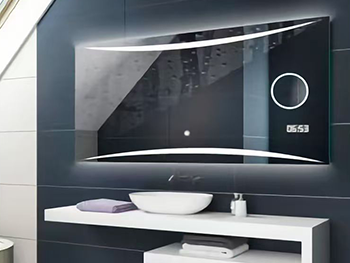
Fully automatic smart bathroom mirrors are becoming a practical choice for modern homes, hotels, apartments, wellness spaces, and commercial washrooms. These mirrors combine lighting, sensors, anti-fog features, touchless controls, and smart power management to improve daily convenience while reducing unnecessary electricity use. For SEO-focused content, this topic is especially valuable because it connects several high-intent search themes, including smart bathroom mirror energy saving, automatic bathroom mirror benefits, LED bathroom mirror efficiency, and touchless mirror technology.
Unlike conventional mirrors with always-on lighting or manual switches, a fully automatic smart bathroom mirror is designed to operate only when needed. It can detect motion, ambient light, occupancy, humidity, and usage patterns, then adjust its functions automatically. This means the mirror may switch on when a person enters, dim when full brightness is unnecessary, turn off after inactivity, and activate anti-fog only during or after shower use. These intelligent behaviors help lower power consumption, extend product lifespan, and support greener building operations.
This article provides a clear, original, SEO-friendly overview of how fully automatic smart bathroom mirrors save energy, what features matter most, and what specifications are commonly used in the industry. It is written for direct use in blog posts, directory pages, product category pages, and industry content hubs.
A fully automatic smart bathroom mirror is a mirror system that uses sensors and built-in smart controls to manage lighting, defogging, display functions, and standby behavior automatically. The goal is to create a more energy-efficient bathroom mirror solution that minimizes wasted electricity while improving user comfort.
In simple terms, a traditional mirror only reflects. A smart bathroom mirror does more. It can:
From an energy perspective, the main advantage is automation. Many bathrooms suffer from light fixtures left on too long, mirrors with inefficient bulbs, and heating elements running longer than necessary. A fully automatic smart bathroom mirror addresses these issues by using smart control logic and efficient components.
Bathrooms are small spaces, but they can be surprisingly energy-intensive. Lighting is often used multiple times a day, especially in households with several occupants or in public spaces with frequent traffic. In addition, anti-fog systems and illuminated mirrors can consume more power if they run continuously or are poorly controlled.
Energy efficiency in bathroom mirrors matters for several reasons:
| Energy Concern | Common Waste Pattern | How Smart Mirrors Help |
|---|---|---|
| Lighting left on too long | Manual switches rely on user behavior | Motion sensors and timers turn lights off automatically |
| Overbright illumination | Fixed high output regardless of daylight | Ambient light sensors adjust brightness dynamically |
| Anti-fog energy waste | Heating element runs longer than necessary | Humidity-based control limits activation time |
| Standby consumption | Always-on electronics draw power continuously | Low-power modes reduce idle consumption |
| Short product lifespan | Frequent manual switching increases wear | Automated operation reduces unnecessary stress |
As energy prices rise and green building standards become more important, the demand for efficient bathroom fixtures continues to grow. Smart mirrors fit naturally into this trend because they provide visible functionality while supporting lower electricity use.
The energy-saving benefits of a fully automatic smart bathroom mirror come from several integrated technologies working together. Below are the main mechanisms that reduce power use in a practical, measurable way.
One of the most effective energy-saving features is motion-activated lighting. The mirror detects when someone enters the bathroom or approaches the sink. The lighting then turns on automatically, and after a preset time of no movement, it switches off or dims.
This prevents the common problem of lights being left on in empty bathrooms. In family homes, shared apartments, offices, hotels, and public restrooms, motion activation can significantly reduce wasted runtime. Because the mirror only operates when needed, energy use becomes demand-based rather than constant.
Many fully automatic smart bathroom mirrors include ambient light sensing. These sensors measure the brightness of the room and adjust the mirror light output accordingly. If natural daylight is already available, the mirror can run at a lower brightness level instead of using maximum power.
This feature is especially useful near windows, skylights, or bright vanity spaces. It supports a more balanced lighting environment and reduces power draw while still maintaining visibility.
Automatic shutoff is another core energy-saving feature. After a preset period of no movement, the mirror enters a low-energy state or turns off completely. This ensures that lighting and smart electronics do not continue consuming electricity once the user has left.
Even a small reduction in idle time can create meaningful energy savings over months or years, especially in high-traffic bathrooms.
Anti-fog technology is one of the most popular smart bathroom mirror features, but it can also be an energy user if it is not controlled properly. Traditional heated demister pads may run on a fixed schedule or remain active longer than necessary.
A fully automatic smart bathroom mirror improves efficiency by using humidity detection, temperature sensing, or timer-based control to activate the anti-fog function only when needed. This prevents unnecessary heating and helps avoid continuous operation after the mirror surface is already clear.
Most fully automatic smart bathroom mirrors use LED lighting rather than older incandescent or halogen systems. LED technology is highly energy-efficient, producing more light per watt and generating less heat.
Compared with traditional bulbs, LED mirror lighting typically offers:
Because the light source itself is efficient, the mirror can deliver strong visual performance without excessive electricity use.
Modern smart mirrors often include standby or sleep modes. When not in active use, internal electronics such as sensors, control circuits, and display modules can shift into a low-power state. This helps minimize constant background energy draw.
While standby consumption may seem small for one unit, it becomes important in multi-unit environments such as hotels, apartment buildings, gyms, and commercial facilities.
Touchless smart bathroom mirrors often use gesture control or proximity sensing. Since the mirror responds automatically, users are less likely to leave functions running by mistake. The more intuitive the operation, the less likely energy is wasted due to forgetfulness or repeated manual toggling.
Fully automatic smart bathroom mirrors offer more than just convenience. They create a practical efficiency advantage that supports sustainable use and lower utility costs.
| Advantage | Description | Energy Impact |
|---|---|---|
| Reduced idle time | Mirror turns off when not in use | Prevents wasted electricity |
| Adaptive brightness | Output changes with room conditions | Optimizes power based on need |
| Efficient LED system | Uses low-wattage lighting technology | Consumes less energy than traditional lamps |
| Smart anti-fog timing | Heating activates only when required | Reduces unnecessary thermal energy use |
| Longer component life | Less frequent switching and heat stress | Supports durability and lifecycle efficiency |
| Better user behavior support | Automation encourages efficient use | Minimizes human error and overuse |
Not all smart bathroom mirrors are equally efficient. The most energy-saving models usually combine several automated functions. Below are the most important features to look for when evaluating a smart mirror from an energy perspective.
Detects movement in the bathroom area and controls lighting based on occupancy. This is one of the best features for reducing wasted electricity.
Measures ambient brightness and adjusts mirror illumination to match room conditions. This avoids overlighting and improves visual comfort.
Detects moisture levels and triggers anti-fog heating when the environment requires it. This reduces overuse of the defogging function.
Allows a set time delay for automatic shutoff. A proper timer prevents lights from staying on longer than needed.
Supports variable brightness levels instead of one fixed output. Dimming is a major contributor to energy efficiency.
Remembers preferred settings so the mirror can resume at the most efficient brightness level used most often.
Minimizes energy draw when the mirror is inactive but ready for immediate use.
The difference between a fully automatic smart bathroom mirror and a traditional mirror becomes clearer when comparing function and consumption behavior.
| Feature | Traditional Bathroom Mirror | Fully Automatic Smart Bathroom Mirror |
|---|---|---|
| Lighting control | Manual on/off | Automatic sensor-based control |
| Brightness adjustment | Usually fixed | Often dimmable and adaptive |
| Anti-fog operation | Manual or always-on in some systems | Automatic and time-controlled |
| Standby efficiency | Not applicable or inefficient in old systems | Low-power smart standby modes |
| User convenience | Basic reflection only | Multi-function and touchless |
| Energy use pattern | Can be wasteful due to human error | Optimized by automation |
| Maintenance frequency | Depends on bulbs and manual use | Often lower due to LED longevity |
For many users, the greatest efficiency gain comes not from one single component, but from the combination of LED lighting, automatic shutoff, and smart sensor control.
Although energy-saving smart mirrors can be useful in any bathroom, they are especially beneficial in settings where usage is frequent or repetitive.
In these spaces, even small improvements in lighting runtime or anti-fog operation can add up over time.
The exact specification of a smart bathroom mirror varies by design and application, but the following table shows commonly referenced industry characteristics. This is useful for buyers, content creators, and spec-sheet style category pages.
| Specification Category | Typical Range or Feature | Notes |
|---|---|---|
| Lighting type | LED | Preferred for low power consumption and long life |
| Brightness control | Adjustable / dimmable | Supports energy-efficient operation |
| Sensor type | Motion, light, humidity, touchless control | Enables automatic power management |
| Anti-fog function | Built-in heating pad or defog system | Often triggered only when needed |
| Power input | Commonly AC-powered | Installed according to local electrical standards |
| Energy mode | Auto shutoff / standby / sleep mode | Helps reduce idle power consumption |
| Control method | Automatic, touchless, or combined | Designed for easy use and efficiency |
| Installation style | Wall-mounted | Common for bathrooms and vanity areas |
| Application | Residential and commercial | Suitable for many interior environments |
| Maintenance level | Low to moderate | Depends on sensor and lighting design |
Automation is the central reason these mirrors save energy. Instead of relying on a person to remember to switch the mirror off, the system performs that task automatically. This is a powerful advantage because real-world usage is often inconsistent.
For example, a user may turn on a bathroom light while getting ready, then leave the room without turning it off. In another case, anti-fog heating may remain active even after the mirror is clear. A fully automatic smart bathroom mirror eliminates much of this waste through built-in logic and sensors.
Automation also improves consistency. When a product behaves the same way every time, energy efficiency becomes predictable. That is one reason smart mirrors are increasingly used in modern residential design and commercial washroom planning.
Energy saving is not the only reason to choose a fully automatic smart bathroom mirror. These products can also support broader environmental and operational goals.
In modern building design, efficiency and comfort are no longer separate goals. The best bathroom mirror solutions achieve both at the same time.
If the main goal is energy saving, not just style or convenience, certain features should be prioritized. The checklist below can help guide content, comparison pages, or product specification sections.
When these features are combined, the mirror can operate efficiently throughout the day without requiring constant user attention.
For Google-friendly content planning, the following keyword themes are closely related to the topic of fully automatic smart bathroom mirrors and energy efficiency. These can be used naturally throughout a blog, category page, or industry page:
Using these phrases naturally in headings, body text, FAQ sections, and specification tables can improve topical relevance for search engines while keeping the content useful for readers.
| Benefit Area | Practical Result |
|---|---|
| Power efficiency | Lower electricity use during daily bathroom routines |
| Smart control | Lighting and defogging operate only when required |
| User convenience | Hands-free use makes the mirror easier to operate |
| Visual comfort | Adaptive brightness supports a better lighting experience |
| Maintenance efficiency | Long-life LED components reduce replacement needs |
| Space modernization | Upgrades the bathroom with a clean, contemporary look |
Fully automatic smart bathroom mirrors save energy by combining LED efficiency, motion detection, ambient light sensing, automatic shutoff, low-power standby modes, and intelligent anti-fog control. These features reduce unnecessary electricity consumption without sacrificing comfort or usability. In both residential and commercial environments, the result is a smarter, more sustainable bathroom experience.
As demand grows for energy-efficient bathroom fixtures, the fully automatic smart bathroom mirror is becoming more than a premium design feature. It is an increasingly practical solution for anyone seeking lower power use, improved convenience, and modern automation in bathroom spaces. For SEO purposes, this topic supports a strong mix of commercial intent, informational depth, and keyword-rich relevance, making it ideal for blog articles, category pages, and industry landing pages.
This website uses cookies to ensure you get the best experience on our website.


 Español
 Français
 日本語
 العربية



 Phone
Comment
(0)