
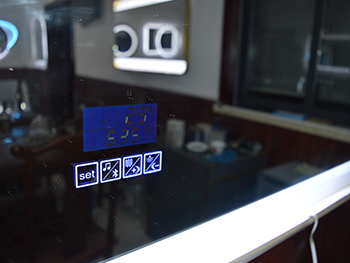
Fully automatic smart bathroom mirrors with smart sensor technology are transforming modern bathrooms into highly functional, hygienic, and energy‑efficient spaces.
This guide explains what a fully automatic smart bathroom mirror is, how smart sensors work inside the mirror, the main benefits, key technical specifications, and
how to compare different smart mirror solutions for residential and commercial bathrooms.
A fully automatic smart bathroom mirror is a wall‑mounted reflective surface that integrates electronic components, smart sensors, and control logic to perform
hands‑free functions without manual switches. With smart sensor technology, the mirror can automatically:
Unlike conventional bathroom mirrors, fully automatic smart bathroom mirrors are designed as part of a smart bathroom ecosystem.
They often connect to smart home platforms, voice assistants, and mobile apps to provide additional functionality while maintaining a clean, minimal aesthetic.
A typical fully automatic smart bathroom mirror with smart sensor technology includes several key components working together:
The internal architecture of a smart bathroom mirror is usually divided into three layers:
Different types of smart sensors enable fully automatic behavior in bathroom mirrors.
Understanding these sensor types helps in choosing the right mirror for specific applications.
Passive infrared (PIR) or microwave motion sensors detect human movement in front of the mirror.
When motion is detected, the mirror can automatically:
After a delay time without motion, the smart bathroom mirror switches back to standby mode to save energy.
Presence and proximity sensors detect how close the user is to the mirror. This smart sensor technology supports:
Ambient light sensors measure the existing light level in the bathroom and adjust LED brightness automatically.
This ensures that the fully automatic smart bathroom mirror:
Temperature and humidity sensors enable advanced climate‑aware automation.
The mirror can monitor the environment and automatically:
Although fully automatic smart bathroom mirrors focus on hands‑free operation, many also include touch or gesture control:
Smart bathroom mirrors include a wide range of features designed for convenience, safety, aesthetics, and energy savings.
Below is a high‑level overview of the most common features found in fully automatic models.
Automatic LED lighting is one of the core functions of a smart mirror. Using motion and ambient light sensors, the mirror can:
Many fully automatic mirrors also provide adjustable color temperature (e.g., warm 3000 K to cool 6500 K) for makeup, shaving, or relaxing baths.
Fog‑free visibility is a critical function in humid bathrooms. A built‑in demister pad gently warms the mirror surface to prevent condensation.
Smart sensor technology activates the demister only when needed, using:
Fully automatic smart bathroom mirrors reduce the need to touch surfaces, which supports hygiene and keeps the mirror clean.
Common touchless controls include:
Some smart mirrors incorporate an integrated display behind the reflective surface. Depending on the design, the display can show:
With smart sensor technology, the display can automatically dim or switch off when no one is in front of the mirror.
Fully automatic smart bathroom mirrors may include integrated speakers and Bluetooth connectivity, enabling:
Motion or presence sensors can automatically pause or reduce audio when the user leaves the detection area.
Advanced smart bathroom mirrors connect to smart home systems via Wi‑Fi, Bluetooth, or other wireless protocols.
Common integrations include:
Fully automatic smart bathroom mirrors with smart sensor technology offer measurable advantages in residential, hospitality, and commercial environments.
Automatic activation means users no longer search for switches with wet hands or in the dark.
The mirror anticipates usage patterns and offers:
Touchless smart sensor technology reduces contact with switches or buttons, which helps:
Because the mirror only operates when needed, energy consumption is optimized. Smart bathroom mirrors can:
Over time, this smart behavior leads to tangible electricity savings, especially in households or facilities with multiple mirrors.
For children, elderly users, and individuals with limited mobility, fully automatic smart bathroom mirrors provide:
Integrating smart sensor technology into the mirror creates a clean, minimalist bathroom design.
There is no need for multiple visible switches or separate light fixtures around the mirror.
Hidden controls and sensors preserve the aesthetic while delivering advanced functionality.
Fully automatic smart bathroom mirrors can be specified for a wide variety of projects and building types.
When comparing fully automatic smart bathroom mirrors with smart sensor technology, several technical parameters should be considered.
The following tables summarize key specifications and typical value ranges found on the market.
| Parameter | Description | Typical Range / Options |
|---|---|---|
| Mirror dimensions | Width x height of the mirror glass | 500 × 700 mm to 1200 × 1600 mm; custom sizes |
| Mirror thickness | Glass thickness plus backing | 4 mm to 8 mm glass; total module thickness usually 25–45 mm |
| Shape | Overall mirror geometry | Rectangular, square, round, oval, irregular decorative shapes |
| Lighting type | LED arrangement around or behind the mirror | Front‑lit, backlit, edge‑lit, or combination lighting |
| Color temperature (CCT) | Light color from warm to cool | 2700 K, 3000 K, 4000 K, 5000 K, 6000–6500 K; often adjustable |
| Luminous flux | Brightness delivered by the LED system | 500 lm to 3000+ lm, depending on size |
| CRI (Color Rendering Index) | Color accuracy of the light | ≥80 CRI common; premium mirrors ≥90 CRI |
| Input voltage | Electrical supply voltage | 110–120 V AC, 220–240 V AC, 50/60 Hz |
| Power consumption | Total electrical power at full brightness, including demister | 20 W to 120 W, depending on size and features |
| IP rating | Ingress protection against water and dust | IP44 common for bathroom zones; IP54 or higher for wet areas |
| Operating temperature | Ambient temperature range for safe use | 0 °C to +40 °C typical |
| Feature | Description | Typical Specification |
|---|---|---|
| Motion sensor type | Technology used for motion detection | PIR (Passive Infrared) or microwave sensor |
| Detection range | Maximum distance for presence / motion detection | 1–4 m front detection zone |
| Detection angle | Horizontal angle covered by the sensor | 60° to 120° depending on sensor and design |
| Hold time | Time the light remains on after last detected motion | Adjustable, typically 30 seconds to 30 minutes |
| Ambient light threshold | Light level at which motion no longer triggers LED activation | 10–200 lux, often adjustable or auto‑calibrated |
| Humidity sensor range | Relative humidity measurement range | 20–90 % RH typical |
| Demister control | Logic for demister activation | Manual switch, humidity‑based auto mode, or timed cycle |
| Touch control zones | Number of capacitive touch areas | 1–4 zones (on/off, CCT, demister, Bluetooth) |
| Dimming method | How brightness is controlled | Step dimming or smooth 10–100 % dimming, via touch or sensors |
| Connectivity options | Smart home integration interfaces | None, Bluetooth only, Wi‑Fi, or Zigbee/Z‑Wave modules |
| Control app support | Mobile or web application availability | Dedicated app or integration with third‑party smart home apps |
| Component | Description | Typical Specification |
|---|---|---|
| Bluetooth version | Standard used for wireless audio streaming | Bluetooth 4.2, 5.0 or later |
| Speaker power | Audio output power rating | 2 × 3 W to 2 × 10 W RMS |
| Display size | Visible diagonal of integrated screen (if present) | 3–10 inches visible area, depending on model |
| Display type | Technology used for visual output | LED/LCD, TFT, or e‑paper for low‑power displays |
| User interface | How the user interacts with the mirror | Touch icons, gestures, mobile app, or voice control |
| Memory and storage | Internal memory for settings and profiles | Non‑volatile memory adequate for user profiles and schedules |
| Firmware updates | Ability to update mirror software | OTA (over‑the‑air) or wired update, depending on connectivity |
Installation of fully automatic smart bathroom mirrors requires attention to electrical safety, moisture protection, and ergonomics.
Since fully automatic smart bathroom mirrors with smart sensor technology integrate active electronics, they usually require:
In some regions, installation must be carried out by a licensed electrician, especially in proximity to bathtubs or showers.
The recommended mounting height for a smart bathroom mirror is based on:
For motion sensors to function correctly, the detection zone should align with the area where users stand in front of the sink.
Incorrect height or tilt can reduce sensor performance.
In a master bathroom, a Fully Automatic Smart Mirror may offer:
In hotel applications, smart sensor technology provides:
For commercial projects, fully automatic smart bathroom mirrors help:
Choosing the right smart bathroom mirror involves balancing design, functionality, budget, and integration needs.
The table below summarizes key decision factors.
| Decision Factor | Questions to Consider | Guidance |
|---|---|---|
| Size and shape | What are the wall dimensions and vanity size? | Ensure the mirror width matches or slightly exceeds the sink width; choose shapes that complement bathroom style. |
| Lighting performance | Is the bathroom naturally dark or bright? What tasks will occur? | For makeup and shaving, prioritize high CRI (≥90) and adjustable color temperatures. |
| Sensor features | Which automatic behaviors are essential? | At minimum, use motion and ambient light sensors; add humidity sensors for frequent hot showers. |
| Automation style | Is full automation or manual override preferred? | Choose models with both automatic modes and simple manual controls for flexibility. |
| Smart home integration | Will the mirror connect to existing smart systems? | Verify compatibility with the chosen smart platform and communication protocol. |
| Audio and display | Are Bluetooth speakers and informational display required? | Include these only if they will be used frequently; they add cost and complexity. |
| Safety and compliance | What are local electrical and bathroom zoning rules? | Confirm IP rating and certification are suitable for the installation zone. |
| Maintenance and longevity | How easy is it to clean and service the mirror? | Look for easily removable mirrors and sealed electronics with long LED lifetimes (≥30,000 h). |
Fully automatic smart bathroom mirrors are relatively low‑maintenance, but regular care ensures long‑term reliability.
LEDs in smart bathroom mirrors typically provide tens of thousands of hours of operation.
Smart sensor technology can extend this lifetime further by limiting usage to when the mirror is actually needed.
Demister pads are also long‑life components, but excessive, continuous operation can shorten their lifespan, which is why automatic humidity‑based logic is beneficial.
Fully automatic smart bathroom mirrors continue to evolve as sensor and smart home technologies advance.
Several emerging trends are shaping the next generation of products.
New presence sensors, including millimeter‑wave radar, allow mirrors to detect not just motion, but subtle movements.
This improves automation in situations where users are relatively still, such as during detailed grooming or makeup application.
Combining humidity, temperature, and occupancy data enables:
As users become accustomed to voice commands and gesture control, fully automatic smart mirrors are increasingly designed with:
Privacy is an important consideration in the bathroom.
To address this, many smart bathroom mirrors:
The table below compares fully automatic smart bathroom mirrors with conventional non‑smart mirrors.
| Aspect | Fully Automatic Smart Bathroom Mirror | Traditional Bathroom Mirror |
|---|---|---|
| Lighting control | Automatic via motion, ambient light, and presence sensors; manual override optional | Manual via wall switch or external fixtures; no automation |
| Anti‑fog functionality | Integrated demister with smart humidity or time‑based control | Usually none; fogged surface after showers |
| Energy efficiency | Optimized via sensor‑based operation and LED technology | Depends on user habits and external lighting; can be inefficient |
| Hygiene | Minimal touch thanks to touchless controls and automation | Requires frequent manual operation of switches and fixtures |
| User comfort | Personalized lighting, temperature, and information display possible | Basic reflection only; comfort depends on external design |
| Integration | Can connect to smart home, audio systems, and other IoT devices | Standalone; no digital integration |
| Initial cost | Higher due to electronics, sensors, and connectivity | Lower purchase cost |
| Operating cost | Lower over time because of reduced energy waste | Potentially higher energy use if lights are left on |
| Design flexibility | Wide variety of integrated lighting and smart features | Flexible in shape and size; limited functional features |
Because fully automatic smart bathroom mirrors are used in damp and wet areas, compliance with safety standards is essential.
Yes. Most smart bathroom mirrors with smart sensor technology are self‑contained.
They perform core functions such as automatic lighting, demisting, and touchless control without any external hub.
Smart home integration simply adds more control and automation options.
Many mirrors provide configuration options that allow users to:
This flexibility ensures that the mirror can adapt to personal preferences or specific building requirements.
When designed and installed according to relevant safety standards, fully automatic smart bathroom mirrors are safe for use in humid environments.
IP44 or higher protection, proper electrical isolation, and professionally installed wiring are key factors.
The lifespan of a smart bathroom mirror depends on component quality and usage patterns.
High‑quality LEDs can last 30,000–50,000 hours or more.
Sensors and control electronics are usually designed for many years of operation.
As with any electronic product, longevity is supported by proper installation, stable power, and good ventilation behind the mirror.
Yes, there is usually a small standby power draw to keep sensors and microcontrollers active.
However, this standby consumption is generally low compared to the power used when lights or demisters are fully on.
Smart sensor technology minimizes overall energy usage by preventing unnecessary full‑power operation.
Fully automatic smart bathroom mirrors with smart sensor technology represent a significant step forward in bathroom design, user comfort, and energy efficiency.
By integrating motion, presence, ambient light, humidity, and touchless control, these smart mirrors deliver hands‑free convenience and consistent illumination exactly when and where it is needed.
Whether installed in a residential en‑suite, a hotel suite, a spa, or a commercial washroom, a carefully specified smart bathroom mirror can enhance hygiene,
simplify daily routines, and contribute to a modern, connected smart home environment.
Evaluating core specifications such as size, lighting performance, IP rating, sensor capabilities, and integration options helps end‑users, designers, and specifiers select the most suitable solution for their projects.
```
This website uses cookies to ensure you get the best experience on our website.


 Español
 Français
 日本語
 العربية



 Phone
Comment
(0)