
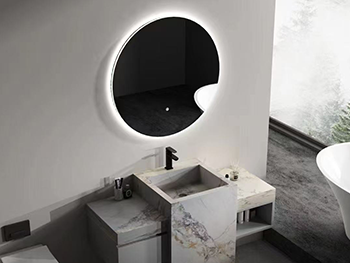
Fully automatic smart bathroom mirrors are becoming a standard fixture in modern commercial restrooms, hotel bathrooms, office towers, gyms, spas, and mixed-use developments. This in‑depth guide explains what fully automatic smart bathroom mirrors are, how they work, how to specify them for commercial projects, and which technical criteria matter most for architects, designers, contractors, and facility managers.
A fully automatic smart bathroom mirror is a wall‑mounted mirror with integrated electronics that operate without manual switches. Common features include:
In commercial projects, these mirrors are engineered for heavy traffic, frequent cleaning, robust safety standards, and long‑term reliability. They combine glass, lighting, sensors, electronics, and mounting hardware into a single integrated solution that simplifies design and installation.
Fully automatic smart bathroom mirrors are used across many types of commercial projects. The table below summarizes common applications and priorities.
| Application Type | Main Objectives | Recommended Smart Mirror Features |
|---|---|---|
| Hotels & Resorts | Guest comfort, brand image, energy savings | LED lighting, anti‑fog, dimming, color temperature control, integrated clock |
| Serviced Apartments | Residential comfort with commercial durability | Automatic lighting, demister, shaving socket, magnifying section |
| Office Buildings | Modern aesthetics, low maintenance, hygiene | Motion‑activated lighting, vandal‑resistant design, splash protection |
| Shopping Malls | High‑traffic durability, easy cleaning | Robust glass, simple auto on/off lighting, basic anti‑fog |
| Gyms & Fitness Clubs | High humidity resistance, flattering light | Powerful demister, warm‑neutral lighting, sensor activation |
| Spas & Wellness Centers | Relaxing ambiance, premium look | Adjustable color temperature, backlit design, edge‑lit patterns |
| Hospitals & Clinics | Hygiene, safety, reliability | Touchless controls, anti‑shatter glass, IP‑rated components |
| Airports & Transportation Hubs | High traffic, quick cleaning, vandal resistance | Reinforced mounting, sensor‑based lighting, robust mirror coating |
| Restaurants & Bars | Atmospheric lighting, compact design | Backlit mirrors, dimmable LEDs, simple automation |
Fully automatic smart bathroom mirrors for commercial projects typically combine several advanced technologies. Understanding these core features helps specifiers choose the right product for each application.
Integrated LED lighting is one of the most visible elements of any smart bathroom mirror.
Quality commercial mirrors prioritize uniform light distribution, high color rendering index (CRI), and efficient drivers compatible with typical building electrical systems.
In high‑humidity environments, mirrors fog quickly. Fully automatic smart bathroom mirrors integrate a demister pad or heating film behind the glass. When activated, the heater maintains the mirror surface at a slightly higher temperature than the ambient air, preventing condensation.
Demisters are commonly linked to:
Fully automatic mirrors typically integrate one or more of the following sensor technologies:
These sensors reduce the need for physical contact, support hygiene strategies, and simplify user interaction.
Advanced commercial smart mirrors provide automatic or semi‑automatic control of light intensity and color temperature, such as:
Depending on the project requirements, fully automatic smart bathroom mirrors may also include:
For commercial bathroom mirror projects, technical details are crucial. The following table summarizes common specification criteria for fully automatic smart bathroom mirrors.
| Specification Category | Typical Values / Options | Relevance for Commercial Use |
|---|---|---|
| Mirror Glass Type | 5–8 mm copper‑free, lead‑free silver mirror; optional safety backing | Resistant to corrosion, suitable for humid bathrooms, improved durability |
| Mirror Size | Standard widths 500–1600 mm; custom sizes on request | Must match vanity modules and wall layouts; larger mirrors for double basins |
| Mirror Shape | Rectangular, square, round, oval, custom geometric designs | Supports design concepts, brand identity, and functional zones |
| Glass Safety Standard | Tempered or laminated; compliance with local safety codes | Protects users in case of impact; essential in public restrooms |
| LED Power | Typically 8–40 W per mirror, depending on size and design | Determines overall load on electrical circuits and energy bills |
| Color Temperature (CCT) | 2700–6500 K; single CCT or tunable white | Affects ambiance and user perception; neutral 4000–5000 K is common in hotels |
| Color Rendering Index (CRI) | >80 as standard; >90 for premium applications | Better CRI improves skin tone accuracy and grooming quality |
| Luminous Efficacy | 70–120 lm/W (system level) | Higher efficacy means more light output per watt, lowering energy costs |
| Input Voltage | 100–240 V AC, 50/60 Hz (global compatibility) or local standard | Simplifies specification for international hotel chains and global projects |
| Ingress Protection Rating | Typical IP44 or higher for bathroom zones | Ensures safe use in humid environments; important near basins and showers |
| Demister Power | 20–80 W depending on area of heated zone | Must balance fog‑free performance with energy efficiency |
| Sensor Type | PIR motion sensor, infrared hand sensor, or combination | Determines how “fully automatic” the user experience will be |
| Control Method | Built‑in drivers, touchless sensors, optional external control line | Influences wiring design and integration with building systems |
| Certifications | CE, RoHS, UL/ETL, CB, and regional safety marks | Important for project approvals, insurance, and facility compliance |
| Operating Temperature | Typically 0–40 °C | Must suit local climate and HVAC conditions |
| Warranty Period | 2–5 years depending on component quality | Indicates expected reliability and service support |
When specifying fully automatic smart bathroom mirrors for commercial projects, design teams should coordinate aesthetics, function, and infrastructure.
Fully automatic smart bathroom mirrors belong to both the electrical and plumbing zones of a project. Proper coordination avoids issues during installation and commissioning.
Commercial restrooms and hotel bathrooms demand higher durability standards than typical residential installations.
Fully automatic smart bathroom mirrors are designed for simple maintenance, but regular care extends their lifespan and preserves appearance.
Although fully automatic smart bathroom mirrors often cost more upfront than basic mirrors, they can reduce total lifecycle costs in commercial buildings.
The table below shows an illustrative energy profile for a mid‑size hotel bathroom mirror. Values are approximate and for reference only.
| Parameter | Value (Example) | Comment |
|---|---|---|
| LED Power | 25 W | Backlit and front‑lit combination for a 900 × 700 mm mirror |
| Demister Power | 50 W | Coverage for central 70% of mirror area |
| Average Daily Usage (Lighting) | 2 hours | Combined guest and housekeeping use |
| Average Daily Usage (Demister) | 0.5 hours | Mostly morning and evening shower times |
| Daily Energy Use | ≈ 62.5 Wh (LED) + 25 Wh (demister) = 87.5 Wh | Per mirror, example only |
| Annual Energy Use | ≈ 31.9 kWh | 87.5 Wh × 365 days |
When multiplied across hundreds of rooms, specifying efficient Fully Automatic Smart Mirrors with optimized sensor control can generate significant savings.
Choosing a fully automatic smart bathroom mirror instead of a traditional mirror and separate light fittings impacts both user experience and building operations.
| Aspect | Fully Automatic Smart Bathroom Mirror | Conventional Mirror + Separate Lighting |
|---|---|---|
| User Interaction | Touchless, sensor‑based, automatic operation | Manual switches, multiple fittings, less intuitive |
| Installation Complexity | Single integrated unit; coordinated electrical feed | Separate mirror, wall light, and potentially demister wiring |
| Design Flexibility | Highly customizable shapes, lighting patterns, and effects | Dependent on available light fixtures and mounting constraints |
| Hygiene | Touchless, easy‑to‑clean flat surfaces | Multiple touchpoints and joints where dirt can accumulate |
| Energy Management | Sensors and timers manage on/off and brightness automatically | Users may leave lights on; harder to control usage |
| Maintenance | Single unit to service; long LED life reduces lamp changes | Separate lamps and mirrors; more points of failure |
| Initial Cost | Generally higher per unit | Lower mirror cost but additional fixtures and switches |
| Total Lifecycle Cost | Often lower due to reduced labor, energy savings, and fewer complaints | Potentially higher due to inefficiency and multiple replacements |
For developers, contractors, and procurement managers, the following points help ensure a successful purchase and installation:
The smart mirror market is evolving quickly, especially in commercial segments where customer experience and operational efficiency are critical.
Fully automatic smart bathroom mirrors can be used in most commercial bathrooms, provided the model meets relevant IP ratings, safety standards, and size constraints. For extremely high‑traffic, vandal‑prone, or industrial environments, robust models with reinforced glass and heavy‑duty mounting systems are recommended.
Most fully automatic smart bathroom mirrors connect to standard AC power supplies. However, project designers should plan for hidden junction boxes, switched feeds if required, and circuit capacity for lighting plus demister loads. Coordination with electrical engineers during design stages is essential.
Quality LED modules in commercial‑grade smart bathroom mirrors are often rated for 30,000 to 50,000 hours of use. In practice, this usually exceeds the typical refurbishment cycle of hotel guest rooms or office restrooms, meaning LED replacement may never be needed during the operational life of the interior fit‑out.
Efficient LED lighting, sensor‑based control, and reduced need for separate fixtures can support energy efficiency targets relevant to green building certifications. While mirrors alone will not determine certification status, they contribute to a more efficient overall lighting strategy.
Demisters in commercial smart mirrors are engineered with insulated heating pads and used behind the glass, away from direct user contact. When installed according to manufacturer instructions and local electrical codes, they are safe for wet environments such as hotel bathrooms and public restrooms.
Some fully automatic smart bathroom mirrors allow adjustments to detection range, time delay, and brightness levels via internal switches, remote controls, or integration with building control systems. Others are factory‑set for simplicity. Reviewing control options during specification helps ensure suitability for the intended environment.
Motion sensors detect general movement in front of the mirror area and are often used to switch lighting on or off automatically. Proximity sensors detect a hand or object within a very short distance from a specific zone on the mirror and are commonly used for gesture‑based on/off or dimming control.
Fully automatic smart bathroom mirrors provide a powerful combination of aesthetics, convenience, energy efficiency, and hygiene for commercial projects. By integrating high‑quality mirror glass, LED lighting, anti‑fog technology, and sensor‑based controls into a single product, they simplify installation and elevate user experience in hotels, offices, shopping centers, gyms, spas, hospitals, and public restrooms.
When selecting fully automatic smart bathroom mirrors for commercial developments, stakeholders should carefully evaluate technical specifications, safety certifications, durability, and integration requirements. A well‑specified smart mirror solution can improve guest satisfaction, reduce operating costs, and enhance the overall image of the property for many years.
```
This website uses cookies to ensure you get the best experience on our website.


 Español
 Français
 日本語
 العربية



 Phone
Comment
(0)