Fully Automatic Smart Bathroom Mirrors for Bathroom Renovations
Fully Automatic Smart Bathroom Mirrors for Bathroom Renovations
Fully automatic smart bathroom mirrors are becoming a central focus in modern bathroom renovations.
They combine lighting, automation, and connectivity to create a more comfortable, energy‑efficient, and
high‑tech bathroom environment. This guide explains what fully automatic smart bathroom mirrors are,
which features they offer, typical specifications, installation tips, and how to choose the right model
for your renovation project.
1. What Is a Fully Automatic Smart Bathroom Mirror?
A fully automatic smart bathroom mirror is a wall‑mounted bathroom mirror that integrates electronic
components, sensors, and control systems to deliver automated functions without constant manual operation.
Unlike a traditional mirror, a smart bathroom mirror can:
- Turn lights on and off automatically using motion or proximity sensors.
- Prevent fogging with an integrated defogger or anti‑fog heating pad.
- Adjust brightness and color temperature via touch controls or app control.
- Display time, temperature, and other basic information on an embedded display.
- Offer Bluetooth audio, voice assistant support, or smart home integration.
The term “fully automatic” typically refers to the ability of the smart mirror to detect user presence,
optimize lighting, and manage defogging or power usage without the user having to press buttons every time.
For bathroom renovations that aim for a clean look and a convenient daily routine, these mirrors are now
considered a key smart bathroom fixture.
2. Key Features of Fully Automatic Smart Bathroom Mirrors
While features vary by model, most fully automatic smart bathroom mirrors include a combination of the
following core functions:
2.1 Integrated LED Lighting
LED lighting is standard in smart bathroom mirrors. It provides uniform illumination that is ideal for
shaving, makeup application, and grooming. Key lighting features include:
- Front‑lit or back‑lit LED strips embedded around the mirror edge or behind the glass.
- Dimmable brightness to adapt to different times of day and user preferences.
- Adjustable color temperature (e.g., 3000K warm white to 6500K daylight) for natural skin tone rendering.
- Energy‑efficient LEDs with long service life, typically over 30,000–50,000 hours.
2.2 Automatic On/Off via Sensors
The “fully automatic” aspect is often realized through sensors:
- Motion sensors detect movement near the mirror and automatically switch the lights on.
- Proximity sensors or infrared sensors can react to a hand wave or user presence.
- Light sensors (in some models) can adapt brightness to ambient light conditions.
- Automatic timeout turns off the mirror lighting after a preset period of inactivity to save energy.
2.3 Anti‑Fog / Defogger Function
A defogging bathroom mirror solves the problem of steam buildup during hot showers. Most smart mirrors use:
- Integrated heating pad behind part or all of the mirror surface.
- Defog switch or automatic defogging that activates when the mirror is in use.
- Quick demisting, often within a few minutes after activation.
For bathroom renovations, the anti‑fog feature is especially valuable in small or poorly ventilated bathrooms
where steam accumulates quickly.
2.4 Touch Controls and Capacitive Buttons
Fully automatic smart bathroom mirrors commonly include soft‑touch or capacitive controls directly on the
mirror surface:
- Power on/off for LED lighting.
- Brightness control with short or long press to dim or brighten.
- Color temperature control cycling through warm, neutral, and cool white modes.
- Defogger control to manually switch the anti‑fog pad.
These controls are usually backlit icons, visible even in low light, and designed to be water‑resistant for
safe use in wet bathroom environments.
2.5 Smart Display and Information Widgets
Some fully automatic smart bathroom mirrors integrate small displays or LED readouts. Common information widgets include:
- Digital clock for timing your morning routine.
- Date and day of the week to keep you on schedule.
- Room temperature and humidity for basic climate awareness.
- Bluetooth connection status and audio controls.
While not every smart bathroom mirror has a large multimedia screen, even simple displays can make the mirror
feel more intelligent and user‑friendly.
2.6 Bluetooth Audio and Multimedia
A growing number of fully automatic smart bathroom mirrors incorporate:
- Built‑in Bluetooth speakers concealed behind the mirror or in the frame.
- Wireless audio streaming from smartphones, tablets, or other Bluetooth devices.
- Touch or app control for volume and track changes.
Premium models may also support:
- FM radio
- Voice assistants integration via external smart speakers or compatible systems.
- Screen mirroring or basic content display (news headlines, weather, etc.).
2.7 Voice Control and Smart Home Integration
While functionality depends on the specific design, some fully automatic smart bathroom mirrors can be connected to:
- Smart home ecosystems like generic voice assistants or smart hubs.
- Wi‑Fi networks for app‑based control and scheduling.
- Automation routines such as turning on the mirror lights when a bathroom motion sensor is triggered.
For bathroom renovations that already include smart lighting, smart ventilation fans, or floor heating,
a smart bathroom mirror can become part of a coordinated automation setup.
3. Benefits of Fully Automatic Smart Bathroom Mirrors in Renovations
Installing a fully automatic smart bathroom mirror during a bathroom renovation offers a wide range of
practical and aesthetic benefits.
3.1 Improved Lighting for Daily Tasks
Balanced, shadow‑free lighting is essential for grooming. A smart bathroom mirror:
- Provides face‑level illumination that reduces harsh shadows.
- Helps with precise makeup application and shaving.
- Allows custom adjustment of brightness and color temperature for different users.
3.2 Convenience and Hands‑Free Operation
Automatic sensors and pre‑set functions make usage effortless:
- No need to search for a light switch with wet hands.
- Mirror lights turn on as soon as you approach and turn off automatically when you leave.
- Defogging can activate automatically for a clearer reflection after a hot shower.
3.3 Enhanced Aesthetics and Modern Design
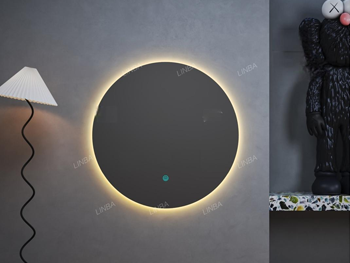
Fully automatic smart bathroom mirrors are often ultra‑slim with minimalist frames or frameless glass.
They contribute to:
- A clean, contemporary aesthetic in new bathroom designs.
- Floating, back‑lit effects that enhance wall textures and tiles.
- Visual expansion of small bathrooms thanks to large reflective surfaces and bright illumination.
3.4 Energy Efficiency and Sustainability
LED technology and automatic controls reduce electricity consumption:
- Low power LEDs use significantly less energy than traditional bulbs.
- Auto‑off timers prevent lights from being left on accidentally.
- Targeted task lighting means ceiling lights may not need to be as bright.
3.5 Increased Property Value and Appeal
Smart bathroom features are increasingly attractive to buyers and tenants. A fully automatic smart bathroom mirror:
- Signals that the bathroom renovation is up‑to‑date and technology‑friendly.
- Improves the perceived value of the bathroom without major structural work.
- Can be highlighted in property listings as a modern smart home feature.
3.6 Better Everyday Organization
Having time, temperature, and lighting controls in one place helps maintain a streamlined morning routine:
- Check the time and stay on schedule while getting ready.
- Quickly adapt lighting for skincare, shaving, or evening relaxation.
- Use Bluetooth speakers to listen to news, podcasts, or music during your routine.
4. Common Types and Styles of Smart Bathroom Mirrors
Fully automatic smart bathroom mirrors come in various configurations to fit different bathroom renovation layouts.
4.1 Frameless LED Bathroom Mirrors
Frameless models feature:
- Sleek, edge‑to‑edge glass with integrated perimeter lighting.
- A minimal, floating appearance ideal for modern bathrooms.
- Multiple mounting sizes (e.g., 24"x32", 30"x36", 48"x36").
4.2 Framed Smart Bathroom Mirrors
Framed smart mirrors incorporate:
- Metal or composite frames that match hardware finishes (chrome, black, brushed nickel, gold, etc.).
- Integrated LED lighting around or behind the frame.
- A slightly more traditional look while retaining smart functions.
4.3 Smart Medicine Cabinet Mirrors
Some fully automatic smart bathroom mirrors also function as medicine cabinets:
- Mirrored doors with integrated lighting and defoggers.
- Storage shelves behind the mirror for toiletries.
- Soft‑close hinges and interior lights.
These are ideal for small bathrooms where wall storage is valuable.
4.4 Full‑Length and Vertical Smart Mirrors
Tall, vertical mirrors can be installed:
- Beside vanities or in dressing areas adjacent to the bathroom.
- For full‑body reflection combined with smart lighting.
- With vertical LED strips or backlit panels along the edges.
5. Typical Technical Specifications
The following tables summarize common specifications of fully automatic smart bathroom mirrors. Exact values
will vary among products, but these serve as typical ranges for planning a bathroom renovation.
5.1 General Specifications
Parameter |
Typical Range / Description |
|---|
Mirror Shape |
Rectangular, square, round, oval |
Common Sizes (W x H) |
500 x 700 mm, 600 x 800 mm, 800 x 1000 mm, 1200 x 800 mm; custom sizes often available |
Glass Thickness |
4 mm – 6 mm silvered glass with safety backing |
Mounting Type |
Wall‑mounted, surface‑mounted, some recessed options for cabinets |
Input Voltage |
100–240 V AC, 50/60 Hz (wide‑range for global use) |
Ingress Protection |
Typically IP44 or higher for bathroom zone suitability |
Safety Standards |
Regional electrical and safety certifications (varies by market) |
5.2 Lighting Specifications
Lighting Spec |
Typical Values |
|---|
Light Source Type |
High‑efficiency LED strips or LED modules |
Luminous Flux |
800–4000 lumens depending on size and configuration |
Color Temperature |
3000K–6500K (adjustable warm, neutral, cool white) |
Color Rendering Index (CRI) |
>80, often >90 for more accurate color rendering |
Power Consumption (Lighting) |
20–80 W depending on mirror size and LED density |
Dimming Capability |
Stepless touch dimming or multi‑step brightness modes |
LED Lifespan |
30,000–50,000 hours or more |
5.3 Defogger and Sensor Specifications
Feature |
Typical Specification |
|---|
Defogger Coverage Area |
Central portion of the mirror or full surface, depending on model |
Defogger Power |
20–60 W, with safety thermal cut‑out |
Defogging Time |
Approximately 2–5 minutes to clear moderate steam |
Sensor Type |
Infrared motion sensor, proximity sensor, or capacitive touch sensor |
Detection Distance |
Approx. 2–10 cm for hand‑wave sensors, up to ~2–4 m for motion sensors |
Auto‑Off Timer |
Adjustable or fixed, often 30 seconds to 30 minutes of inactivity |
5.4 Smart and Audio Specifications
Smart / Audio Feature |
Typical Specification |
|---|
Bluetooth Version |
Commonly Bluetooth 4.0 or higher |
Speaker Output |
2 x 5 W or similar stereo configuration |
Display Type |
LED time/temperature display or small LCD/segment display |
Smart Home Integration |
Optional; via Wi‑Fi modules or external hubs (varies by design) |
Control Interfaces |
Touch buttons, sensor triggers, optional mobile app |
6. Installation Considerations for Bathroom Renovations
Proper installation ensures safe, reliable operation of fully automatic smart bathroom mirrors. During a
bathroom renovation, planning should include both mechanical mounting and electrical connections.
6.1 Electrical Requirements
- Provide a dedicated power supply near the mirror installation area.
- Use properly rated wiring following local electrical codes.
- Connect through a residual current device (RCD) or ground fault circuit interrupter where required.
- Ensure voltage compatibility with the mirror’s rated input (often 100–240 V AC).
In many cases, mirrors are connected to a separate circuit from the main bathroom ceiling light to allow
independent control, even when automatic sensors are present.
6.2 Mounting Height and Position
- Mount the mirror such that the center is approximately at eye level for most users.
- Allow clearance for sensor operation, especially for hand‑wave or motion detectors.
- Align the mirror with the vanity and washbasin for balanced proportions.
- Ensure the surface is solid and flat for secure mounting.
6.3 Bathroom Zones and Safety
Bathrooms are divided into zones that define which type of electrical equipment can be installed safely:
- Install the mirror outside direct splash zones where possible.
- Verify that the mirror’s IP rating and safety certifications match the intended zone.
- Follow local regulations regarding distance from showers, bathtubs, and sinks.
6.4 Ventilation and Moisture Considerations
- Ensure the bathroom has adequate ventilation to minimize condensation on walls and electronics.
- Use silicone sealant where necessary to protect behind‑mirror structures.
- Avoid blocking ventilation openings on the back or sides of the mirror, if present.
6.5 Integration With Other Smart Bathroom Elements
During renovation, consider a coordinated smart bathroom design:
- Synchronize lighting scenes with ceiling lights, wall sconces, and the smart mirror.
- Connect motion sensors or switches to a central home automation system.
- Plan for future expansions such as smart showers, digital faucets, or heated floors.
7. How to Choose a Fully Automatic Smart Bathroom Mirror
Choosing the right fully automatic smart bathroom mirror involves balancing size, features, budget, and design style.
7.1 Determine the Right Size
- Measure the vanity width and wall space available.
- For single sinks, mirrors often match or slightly exceed the basin width.
- For double vanities, consider one large mirror or two separate mirrors.
7.2 Select the Feature Set
Key questions to guide feature selection:
- Do you need full automation with motion sensors, or is touch control sufficient?
- Is a defogger essential in your climate and ventilation setup?
- Will you use Bluetooth audio and built‑in speakers?
- Do you care about display information like time and temperature?
- Do you plan to connect the mirror to a smart home system?
7.3 Consider Design and Aesthetics
- Match the mirror frame finish with faucets, handles, and accessories.
- Decide between frameless modern or framed transitional designs.
- Check the LED color temperature options to complement the tile and wall colors.
7.4 Evaluate Build Quality and Materials
- Look for copper‑free or low‑iron glass where specified, for better clarity and durability.
- Check the backing material for moisture resistance and safety film.
- Confirm IP rating and suitable certifications for wet environments.
7.5 Assess Energy Use and Long‑Term Costs
- Compare total wattage versus brightness output.
- Look at LED life expectancy and whether components are replaceable.
- Factor in energy savings from automatic shut‑off and efficient LEDs.
8. Maintenance and Care
Routine maintenance helps extend the lifespan and appearance of fully automatic smart bathroom mirrors.
8.1 Cleaning the Mirror Surface
- Use a soft, non‑abrasive cloth and glass cleaner.
- Avoid harsh chemicals that can damage coatings or backlit edges.
- Do not spray cleaner directly on touch buttons or sensor windows; apply to the cloth first.
8.2 Checking Electrical and Sensor Functions
- Periodically test motion sensors, touch controls, and defogger functions.
- Monitor for unusual flickering or dimming which may indicate driver issues.
- Ensure ventilation openings remain free of dust and debris.
8.3 Dealing With Condensation and Humidity
- If heavy condensation persists outside the defogger zone, confirm bathroom ventilation is adequate.
- Use an exhaust fan and open doors or windows when possible.
- Follow manufacturer guidance on maximum humidity levels for electronics.
9. Use Cases and Applications
Fully automatic smart bathroom mirrors can be integrated into a variety of renovation scenarios beyond standard home bathrooms.
9.1 Residential Bathroom Renovations
- Master bathrooms where convenience, aesthetics, and luxury are priorities.
- Guest bathrooms to offer visitors a comfortable and modern experience.
- Small urban bathrooms where smart mirrors help maximize space and light.
9.2 Hospitality and Accommodation
- Hotels and resorts implementing smart bathroom concepts.
- Serviced apartments and vacation rentals adding premium features.
- Spas and wellness centers for high‑end dressing rooms and restrooms.
9.3 Commercial and Public Facilities
- Office buildings and corporate restrooms emphasizing modern design.
- High‑end retailers and salons offering enhanced fitting room experiences.
- Gyms and fitness centers upgrading locker room amenities.
10. Frequently Asked Questions About Smart Bathroom Mirrors
10.1 Are fully automatic smart bathroom mirrors safe in wet areas?
Smart bathroom mirrors are designed specifically for moisture‑rich environments. When they carry appropriate
ingress protection (e.g., IP44 or higher) and are installed according to electrical codes, they are safe for
use near sinks and in general bathroom zones. Direct exposure to showers or bathtubs should be evaluated case
by case using local regulations.
10.2 Do defoggers make the mirror surface hot?
Defoggers use low‑wattage heating elements that warm the mirror surface slightly above ambient temperature.
Users typically notice a gentle warmth but not an uncomfortable or hazardous level of heat. Over‑temperature
protection is usually integrated for safety.
10.3 Can I replace the LEDs if they fail?
Many fully automatic smart bathroom mirrors use integrated LED systems that are not user‑replaceable.
In practice, LED lifespans are long, but replacement may require professional service or mirror replacement.
Before purchase, check whether the model offers modular LED parts and what the warranty covers.
10.4 How do motion sensors affect daily use?
Motion sensors improve convenience by turning the mirror lighting on as you enter the detection range.
Some users prefer this fully automatic operation, while others may set a combination of manual and automatic
controls. During renovation, placement and sensor direction should be considered carefully to avoid unwanted
triggering from adjacent areas.
10.5 Are smart bathroom mirrors difficult to install?
Mechanical mounting is similar to installing a standard mirror or cabinet, though the weight may be higher.
The main complexity is electrical wiring. For safety and compliance, a qualified electrician should connect
the mirror to the mains supply, especially in renovation projects involving structural changes and new bathroom zones.
11. SEO‑Relevant Summary: Why Include a Fully Automatic Smart Bathroom Mirror in Your Bathroom Renovation?
Fully automatic smart bathroom mirrors combine LED lighting, defogging, sensor‑based automation, and optional
Bluetooth and smart integration in a single fixture. For homeowners, designers, and contractors planning a
bathroom renovation, upgrading from a traditional mirror to a smart bathroom mirror delivers multiple benefits:
- Enhanced lighting quality for grooming and daily routines.
- Hands‑free operation and automation through motion and proximity sensors.
- Consistent clear reflection with integrated defogger technology.
- Energy‑efficient performance with long‑life LEDs and auto‑off features.
- Modern aesthetics that complement contemporary bathroom designs.
- Additional smart features like Bluetooth speakers, clocks, and temperature displays.
When comparing smart bathroom renovation options, fully automatic smart bathroom mirrors stand out as a practical,
visible upgrade that improves both functionality and design. By carefully considering size, specifications, safety
standards, and desired features, renovators can select a smart mirror that aligns with their overall bathroom concept
and long‑term comfort goals.
```



 Español
 Français
 日本語
 العربية



 Phone
Comment
(0)